
Table of contents
- What makes Vieux Lyon special
- Best things to see in Vieux Lyon
- How to visit the traboules
- Where to eat in Vieux Lyon<
- Best time to go
- How to get there and get around
- Practical tips for visitors
- FAQs
- Conclusion
What makes Vieux Lyon special
Vieux Lyon is one of the best-preserved Renaissance quarters in Europe and part of the Historic Site of Lyon, which UNESCO inscribed in 1998. The district sits below Fourvière and along the Saône, so it works beautifully as a walking area for first-time visitors who want history, food, and scenic streets in one place. It is especially strong for travelers who want a compact, walkable introduction to Lyon’s old center.
The area feels different from the modern city: buildings are closely packed, courtyards are tucked behind doorways, and passages called traboules connect streets through blocks. That makes Vieux Lyon one of the top things to do in Lyon for visitors who enjoy exploring on foot. It is also close to major landmarks, so it fits naturally into a wider Lyon itinerary.
Best things to see
Saint-Jean Cathedral
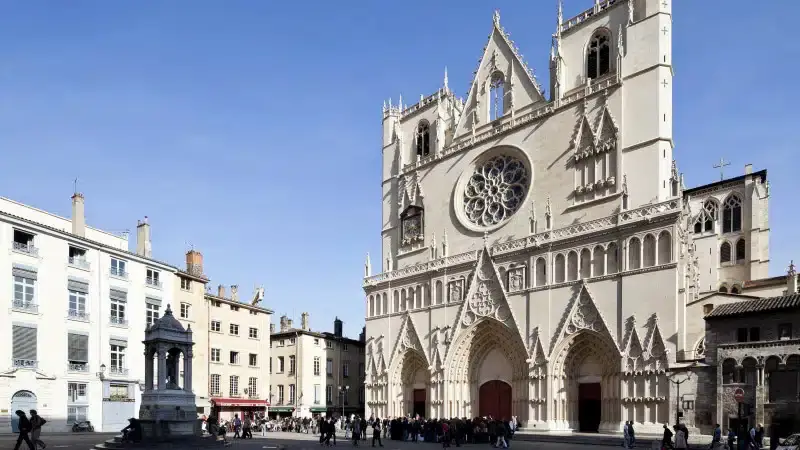
Saint-Jean Cathedral is one of the district’s main landmarks and a major stop for Lyon sightseeing. Its Gothic and Romanesque details make it a strong first stop if you want a sense of the neighborhood’s long history. The square around it is also a useful place to orient yourself before walking deeper into the old streets.
Renaissance streets and facades
The main pleasure of Vieux Lyon is walking slowly and noticing the architecture. Many streets are lined with Renaissance-era buildings, painted shutters, and shopfronts that photograph well in soft morning or late-afternoon light. This is one of the simplest and best travel experiences in the city because it requires no ticket and very little planning.
Hidden courtyards and passages
The traboules are what make Vieux Lyon feel unique. These passageways cut through buildings and courtyards, creating shortcuts between streets and adding a sense of discovery to the visit. They are not always easy to find on your own, which is part of the fun.
Nearby Fourvière
Although Fourvière is technically outside the old quarter, it pairs perfectly with Vieux Lyon because the historic site of Lyon includes both areas. Many visitors start in the old town and then walk or take the funicular up for panoramic views over the city. If you are building a fuller itinerary, this combination gives you the best mix of streets, views, and monuments.
How to visit the traboules
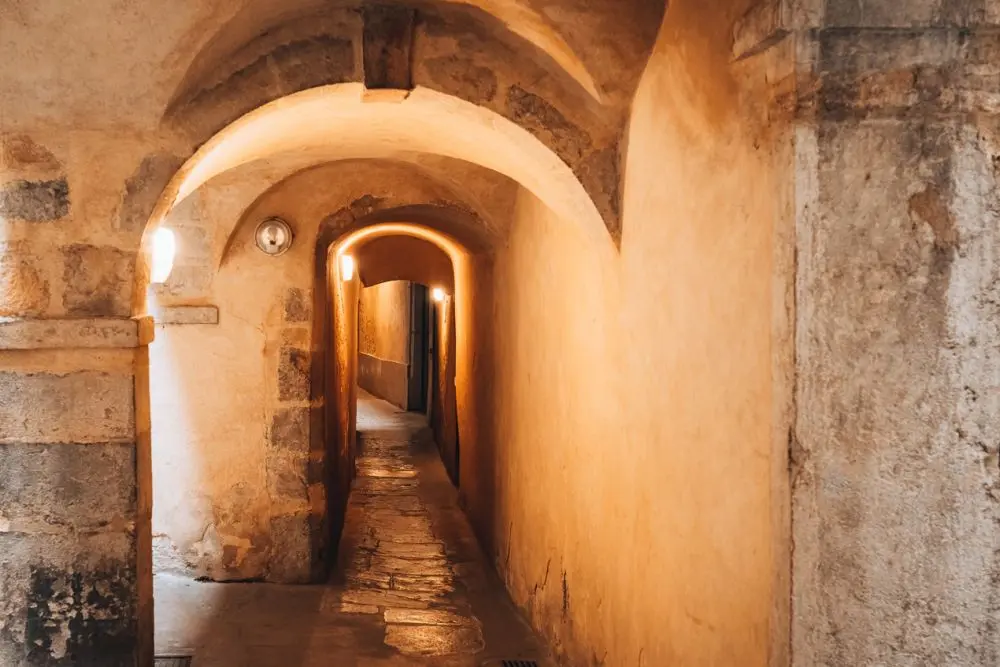
Traboules are one of the signature experiences in Vieux Lyon, but visitors should treat them as residential and semi-private spaces rather than open-air attractions. Some passages are accessible to the public, while others may be closed or only open during certain hours. A guided walk is often the easiest way to understand which ones are worth seeking out and how they connect to the district’s history.
If you prefer to explore independently, go slowly and look for entrance plaques, open doors, and posted signs. The best approach is to treat traboules as part of the neighborhood rather than as a checklist item. That mindset makes the visit feel more rewarding and less rushed.
Where to eat
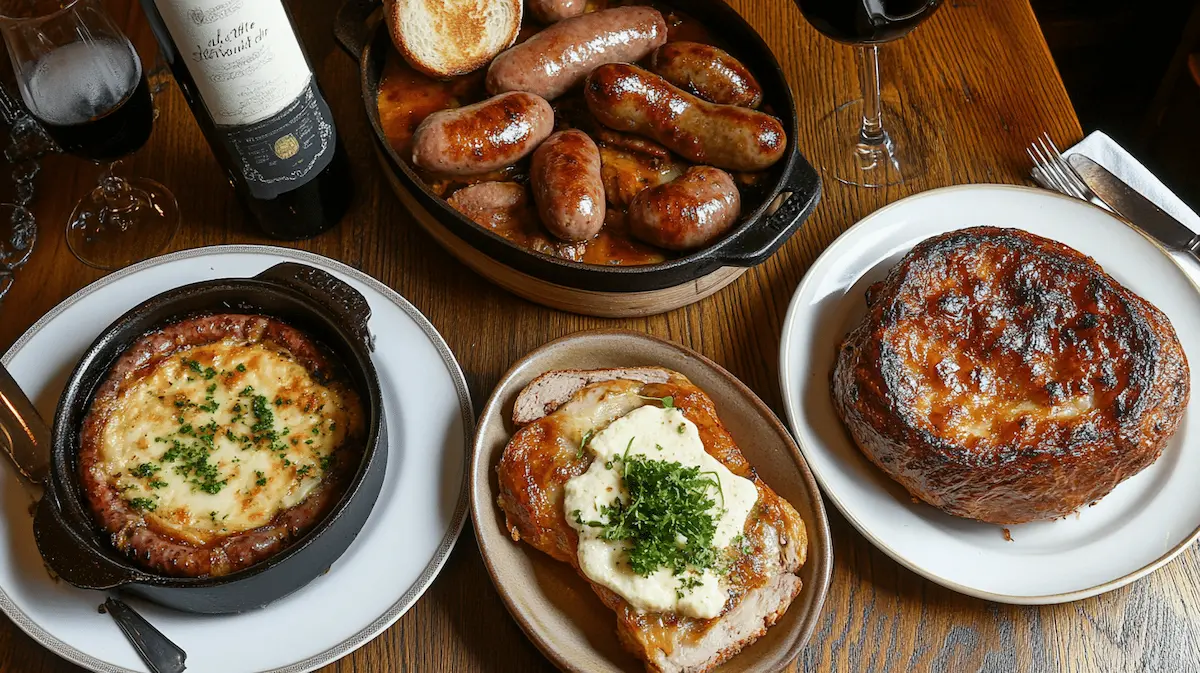
Vieux Lyon is one of the best places to try Lyon food, especially in a traditional bouchon. These restaurants are known for hearty local dishes and a classic dining atmosphere, which makes them a natural fit for a historic neighborhood. If you want a more complete food-focused visit, this is one of the most practical areas in the city for lunch or dinner.
For a better experience, book ahead for busy meal times and check menus before sitting down. Prices vary, but traditional meals in tourist-heavy zones can be higher than in less central parts of Lyon. If you want a more relaxed experience, aim for an earlier lunch or a weekday dinner.
What to order
- Quenelles.
- Salade lyonnaise.
- Andouillette if you like stronger flavors.
- Local cheeses and simple regional desserts.
A good rule is to choose a place that looks lively but not overly staged. In a popular tourist district, the best restaurants usually balance local dishes, visible kitchen activity, and straightforward service.
Best time to visit
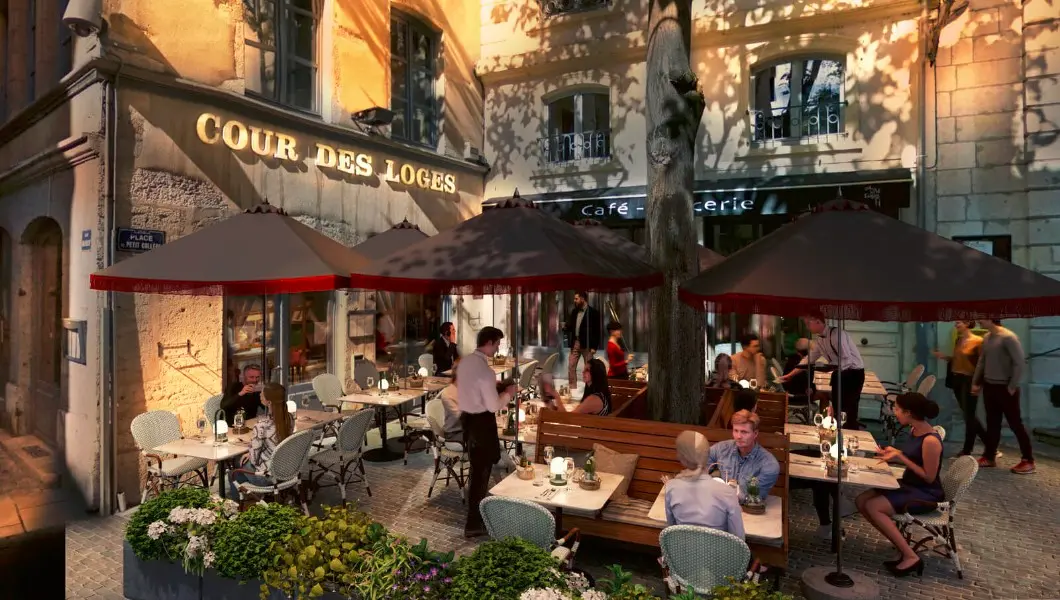
Morning is usually the calmest time to explore Vieux Lyon, especially if you want cleaner photos and fewer crowds. Late afternoon also works well because the stone streets and facades catch softer light, which improves photography. If you are visiting in summer, earlier in the day is more comfortable because shaded lanes can still get busy and warm.
Weekdays are often better than weekends if you want a quieter visit. That matters most if you plan to visit the traboules or sit down for a long lunch. The district remains enjoyable year-round, but spring and early autumn usually offer the best balance of weather and foot traffic.
How to get there
Vieux Lyon is easy to reach from the rest of the city. The Lyon tourist office notes that Bellecour is a central access point, and metro connections help visitors move efficiently around central Lyon. Once you arrive near the center, the old town is best explored on foot.
If you are arriving from a train station or another district, use metro and tram connections to get close, then walk the last part. The neighborhood is compact, but the streets can be uneven or steep in places, so comfortable shoes matter. For most travelers, that is still easier than trying to drive or park in the area.
Practical visitor tips
- Wear shoes with grip because some streets are cobbled and can be slippery after rain.
- Bring a light layer, since shaded lanes can feel cooler than the rest of the city.
- Plan at least two hours if you want a relaxed visit, and half a day if you want food and sightseeing together.
- Keep cash or a card handy for cafés, bakeries, and smaller shops.
- Use a map but expect to wander a little; the district is best enjoyed with some flexibility.
- Book lunches or dinner reservations in advance during peak travel periods.
If you want a broader base for exploring the city, the district also fits well with staying in the center rather than far outside it. That makes it easy to combine Vieux Lyon with other Lyon attractions on the same day.
FAQs
Is Vieux Lyon worth visiting?
Yes. It is one of the most atmospheric and historically rich parts of the city, with UNESCO status and excellent food options.
How long do you need in Vieux Lyon?
Two to three hours is enough for a basic visit, but half a day is better if you want to eat, explore, and take photos at an easy pace.
Are the traboules open to everyone?
Some are open to the public, but not all of them. Access can vary, so a guided visit helps.
What is the best time to visit Vieux Lyon?
>Morning and late afternoon are usually the best times for lighter crowds and better photography.
Can you eat well in Vieux Lyon?
Yes. It is one of the best areas in the city for traditional Lyon food and bouchons.
Is Vieux Lyon good for first-time visitors?
Yes. It is compact, walkable, and easy to combine with nearby landmarks and viewpoints.
Do you need a car in Vieux Lyon?
No. Walking and public transport are better than driving in the historic center.
Conclusion
Vieux Lyon is one of the best places to start when you visit Lyon because it combines history, atmosphere, and food in a single walkable area. If you want to understand the city quickly, this is the neighborhood that gives you the strongest first impression. For more planning help, explore Lyon Experiences & Things To Do and the homepage, and bookmark Go Visit Lyon for your next trip.
